Format the XML Before You Blame the Feed, Mapping, or Importer
Use XML Formatter when a copied feed, SOAP response, or export looks broken enough to trigger a mapping investigation even though the first problem may be unreadable structure.
Open XML Formatter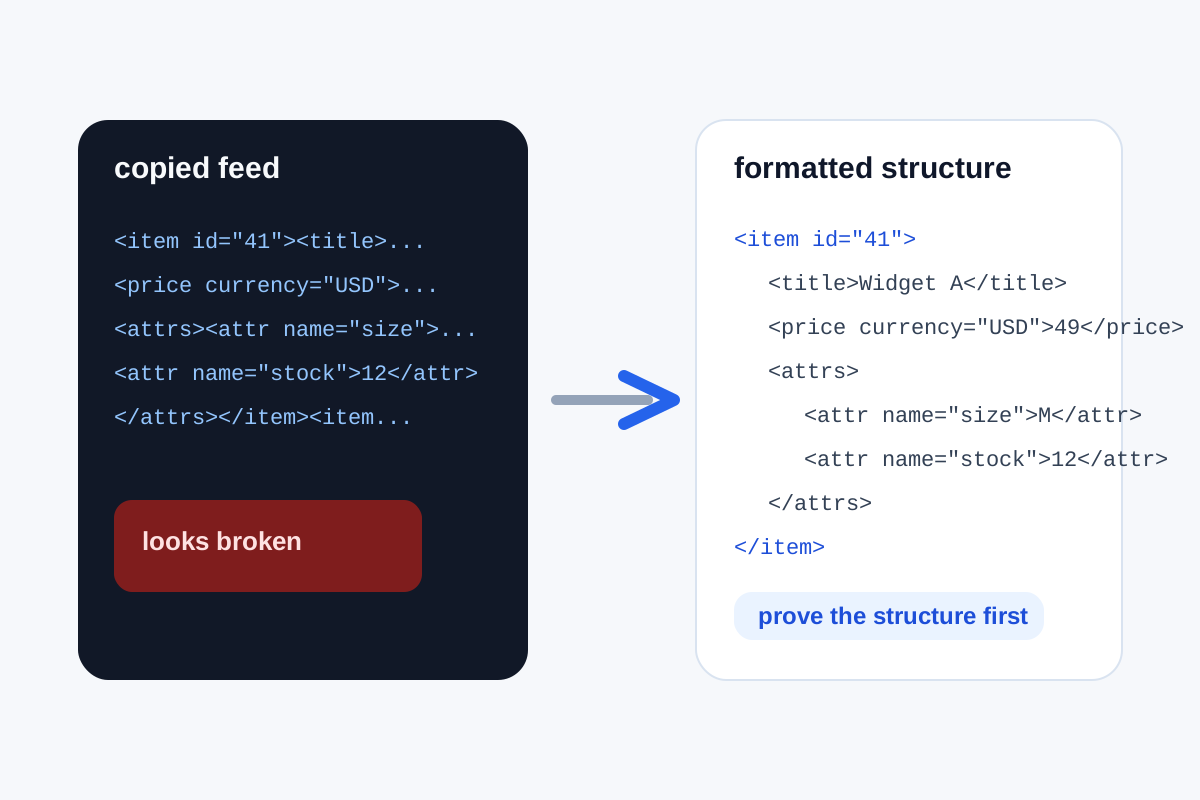
Unreadable XML makes teams accuse the wrong layer. A product feed arrives as one dense string, a SOAP response is pasted into chat without indentation, or an export file mixes long attributes and repeated child nodes until nobody can tell whether one item is missing a tag or whether the whole payload is fine. The mapping logic may not be the first problem at all. The first problem may be that humans cannot see the structure yet.
What the false alarm usually looks like
- Someone claims a child node is missing, but the real issue is that repeated siblings are impossible to scan in one compressed line.
- A vendor feed looks inconsistent across records, yet the attributes are simply wrapped in a way that hides their parent-child relationship.
- An import map seems wrong because two elements look adjacent, but one is actually nested deeper than expected.
- A copied response appears truncated when the closing structure is merely hard to trace in dense markup.
Why formatting changes the debugging path
Formatting restores visual hierarchy. Once indentation, sibling grouping, and attribute placement become visible, you can ask a sharper question: is the source XML genuinely malformed, or was the inspection method weak? That distinction matters because rewriting the importer is expensive while improving the read step is cheap.
A practical problem-first workflow
- Paste the exact XML you received so the first view still reflects the source system rather than a hand-edited copy.
- Format it before comparing records or writing any mapping notes.
- Inspect one repeated entity at a time and compare the same child tags across siblings.
- Mark the first concrete structural difference you can prove, such as a missing node, different attribute placement, or unexpected nesting depth.
- Only after that proof exists should you decide whether the bug belongs to the feed, the transformation step, or the importer.
What formatting does not prove
A readable XML document can still be semantically wrong. Formatting does not validate schema rules, data completeness, or business meaning. It simply prevents you from escalating a readability problem into a false structural diagnosis.
Related UtilFlow moves
If the destination ultimately needs JSON, continue to XML to JSON only after the original hierarchy is understood. If two versions of the same XML still look suspicious, compare the cleaned outputs with Text Diff instead of eyeballing both blocks side by side.
FAQ
Why format XML before debugging an import?
Because unreadable structure can make a healthy feed look broken, and formatting is the fastest way to confirm what the hierarchy actually is.
Does formatting XML validate the feed?
No. It improves readability; schema or business-rule validation is still a separate check.
What should I compare first after formatting?
Compare repeated entities, nesting depth, and attribute placement before moving to value-level differences.