Define the Focus Output Before a Tomato Timer Turns Into Background Noise
Use a Pomodoro-style timer as a decision workflow with a visible output, interruption rule, and deliberate break instead of passive countdown noise.
Open Tomato Timer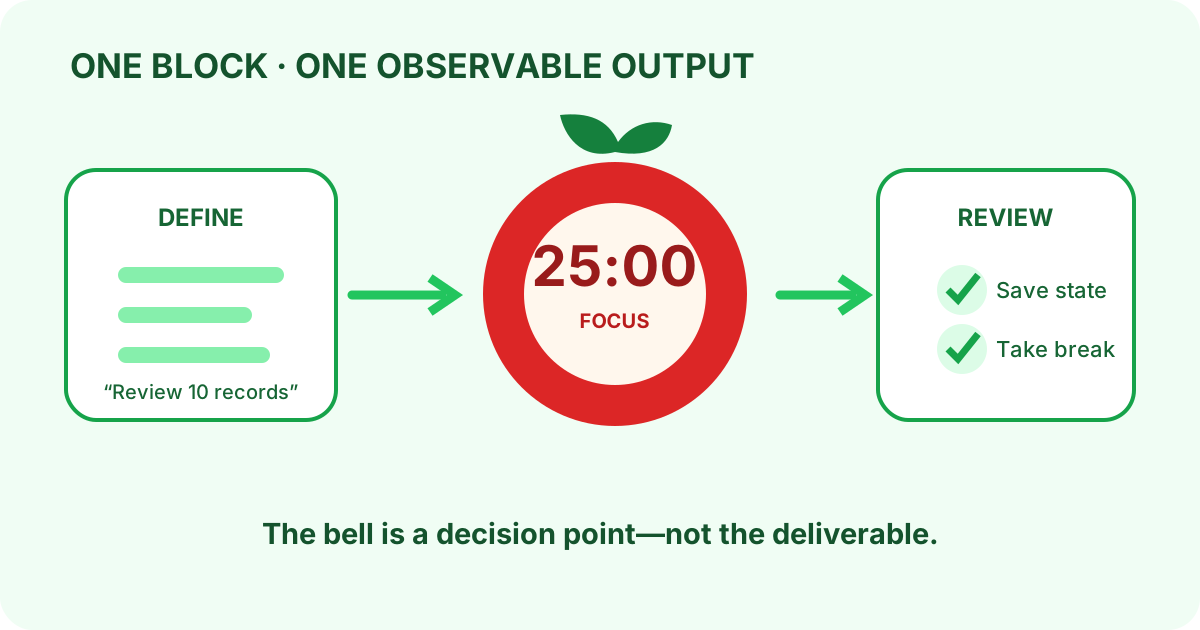
A 25-minute countdown starts, but the work block contains email, research, drafting, and three tabs of cleanup. The timer finishes without a clear result because time was bounded while the intended output was not.
Give each focus block one observable finish line
- Write one output that can be checked at the bell: outline five sections, review ten records, or fix one failing test.
- Close inputs that are not required for that output.
- Choose a work duration in Tomato Timer that is long enough to enter the task but short enough to protect attention.
- Record interruptions on a parking list instead of switching immediately.
- At the bell, save the state, mark what changed, and take the selected short or long break.
Use the bell as a review point, not an automatic stop
If a coherent thought needs another minute to capture, write the note before stepping away. If the output is complete early, stop rather than manufacturing activity until zero. The timer supplies a decision point; it should not override safe, sensible task boundaries.
Adjust the cycle from evidence
After several sessions, compare planned outputs with completed ones. Repeatedly unfinished blocks may indicate work that needs smaller slices, missing prerequisites, or a longer focus interval. Repeated idle time may mean the output is too small. Tune duration only after checking task size and interruption patterns.
FAQ
Does a Pomodoro session have to be 25 minutes?
No. Twenty-five minutes is a common default, but the useful duration depends on the task, attention, and break needs.
What should I do with an interruption?
If it is not urgent, write it on a parking list and return to the defined output. Handle the list during the review or break.
Should I keep working when the timer ends?
Use the bell to review. Capture a coherent stopping point, then decide deliberately whether to break, finish a tiny remainder, or schedule another block.