Separate Average Speed From Moving Speed Before a Delivery Plan Loses the Stops
Solve the common speed-conversion problem where a correct unit conversion still produces a bad arrival estimate because stopped time disappeared.
Open Speed Converter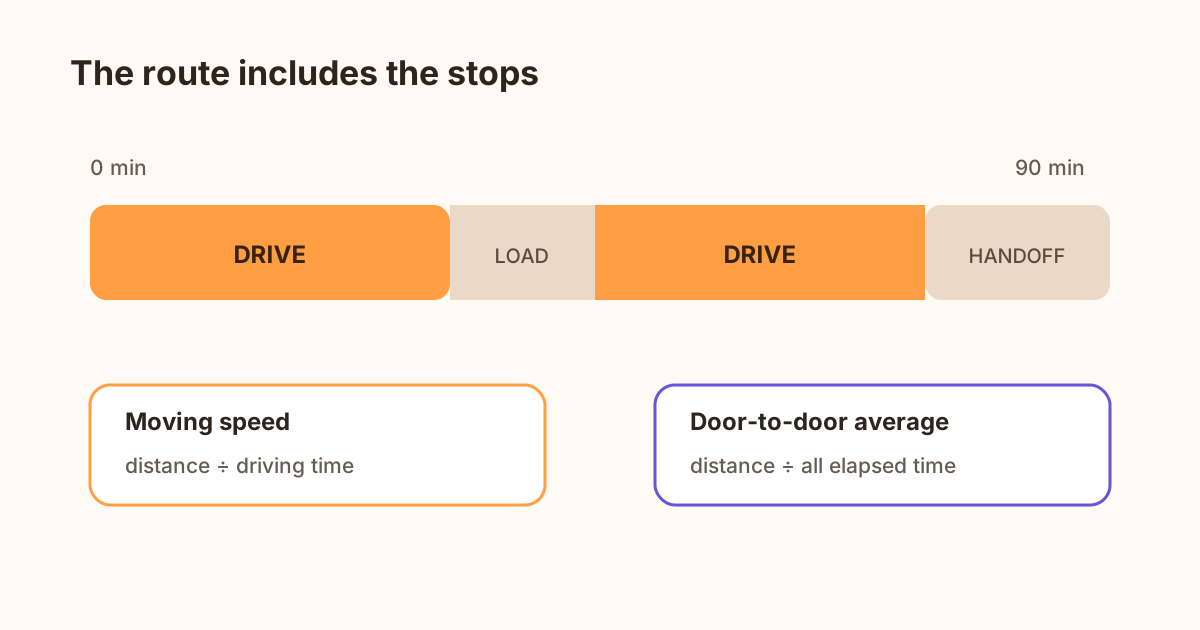
Converting 50 miles per hour to kilometers per hour preserves the speed measurement; it does not turn that measurement into a door-to-door forecast. Loading, traffic lights, breaks, and handoff time belong in elapsed time even when the vehicle's moving-speed display excludes them.
The denominator is the real decision
- Moving speed uses only time in motion.
- Door-to-door average speed divides total distance by all elapsed time, including stops.
- Convert the measured speed unit before comparing like with like.
- For an arrival estimate, model fixed stop time separately instead of silently lowering or raising the converted speed.
A check before sharing the ETA
Write the distance, moving time, stopped time, and chosen speed definition beside the result. Use Speed Converter for mph, km/h, knots, or meters per second, then calculate the schedule from the definition the recipient actually needs.
Related UtilFlow links
Use Speed Converter for comparable units, Time Converter for duration labels, and Date Calculator when the final question is a dated arrival or service window.
FAQ
Why is average speed lower than the vehicle's displayed speed?
Door-to-door average speed includes time spent stopped, while a moving-speed display may exclude it.
Does converting mph to km/h change an ETA?
No, not by itself. A consistent unit conversion describes the same speed; ETA changes only if distance, speed, or included time changes.
Which speed should a delivery plan use?
Use a route-calibrated door-to-door average or model travel and fixed stops separately. State the assumption beside the estimate.